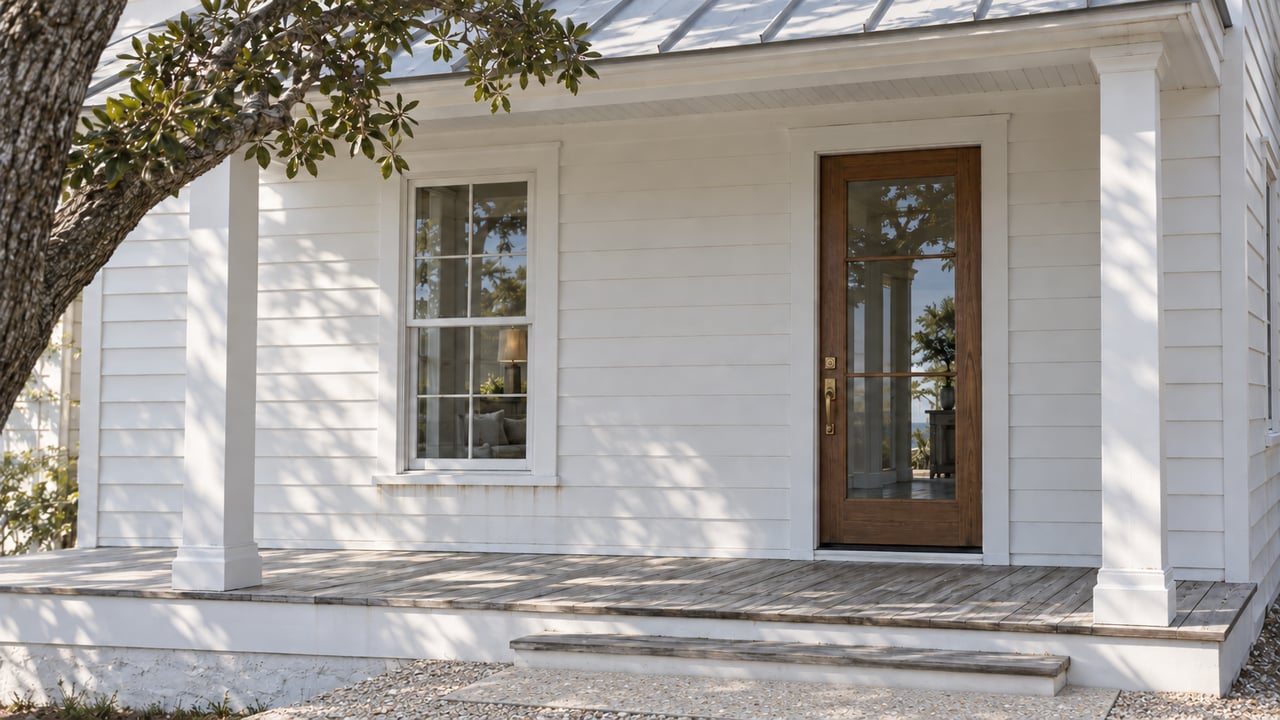
Why a Seaside Renovation Runs on the Town's Calendar, Not Your Contractor's
October 1, 2026
October 1, 2026
A contractor can clear a crew for next Tuesday. Seaside's Architectural Review Committee cannot. SARC, the town's design authority, meets once a month on the second Thursday, and it only reviews packages that were submitted by the first Thursday at 3 p.m. Miss that window by a single day and the project doesn't wait a week. It waits a month.
For anyone preparing to list a Seaside cottage, or closing on one with plans to touch the exterior before next season, that monthly rhythm matters more than the contractor's schedule or the county permit queue. It's the clock that actually sets your timeline, and it's easy to miss until you've already lost thirty days to it.
SARC's scope covers anything visible from the street: roofs, porches, balconies, windows, doors, exterior colors, lighting, sitework, and landscaping. Interior work tends to move faster. Kitchens, baths, fixtures, paint, and even outdoor showers have more flexibility than an exterior redesign, since none of it changes how the cottage reads from the sidewalk.
Material choices carry weight in review, too. The code favors traditional coastal materials, wood siding, wood trim, wood doors and windows, and rot-resistant components, with simple gable and hip roof forms generally preferred. Synthetic or sharply modern materials aren't off the table, but they draw more scrutiny and more likely a second look from the committee before approval.
SARC isn't the only clock running, either. Walton County's Building Division requires any project submitted after December 31, 2023 to meet the 2023 Florida Building Code, and if the lot sits seaward of the Coastal Construction Control Line, Florida's Department of Environmental Protection has to sign off before the county will issue a permit at all. A homeowner who times a SARC submission perfectly can still find the project stalled at the county or state level. The point isn't that any single approval is unreasonable. It's that a Seaside renovation runs through three separate calendars, and only one of them is monthly.
"Seaside rules" sounds like a single document. It isn't. The town's residential neighborhoods sit under nine separate recorded declarations, coordinated through the Seaside Town Council. Separately, the original developer entity, Seaside Community Development Corp, retained authority over commercial and public areas like Town Center and the Lyceum. Which rules apply to a given cottage depends on which declaration covers that specific lot, not on the town's name.
This isn't an abstraction. The Seaside I Homeowners Association posted a fall update noting that Richard Jabbour had stepped down as board president after his term, with Charles Edmundson elected president, Joel Blackstock taking on vice president and secretary, and Jeff Grant continuing as treasurer. The same update mentioned that Seaside I's board now meets the Tuesday following each Seaside Town Council meeting, to keep decisions visible to homeowners, and that SCDC photographers would be on-site ahead of the Red Wine Festival shooting promotional content. Two organizations, two calendars, both live in the same town on the same weekend. A buyer or seller who assumes one HOA speaks for all of Seaside is working from an incomplete picture of who actually approves what.
Sellers often want to freshen a lot before listing photos. In Seaside, some of the obvious moves aren't available at any speed. The code prohibits grass seed and sod on residential lots, along with mulch. Paths are expected to be sand or white clay rather than gravel or pavers, and driveways need to be pervious or specifically approved. Plantings are tied to an approved Seaside plant list, and fencing has its own paint and gate specifications written into the code.
Pools carry the tightest restriction of all. In-ground pools are allowed only within the main house's footprint, and pools, hot tubs, and spas are prohibited along frontages entirely. This isn't a timing problem that a faster SARC meeting would solve. It's a design constraint that exists regardless of how far in advance a seller plans.
Renovation timing gets attention because it's visible. The estoppel certificate rarely does, and it's just as capable of stalling a closing date.
Florida law gives an association up to 10 business days from a written request to deliver an estoppel certificate, whether the property is governed by an HOA declaration or organized as a condominium. For HOA-governed properties, the relevant statute is F.S. 720.30851. The base fee caps set by that statute, adjusted for inflation by the Department of Business and Professional Regulation every five years, currently stand at $299 for standard preparation, an additional $119 for expedited delivery within three business days, and an additional $179 if the account is delinquent. The next scheduled adjustment is July 1, 2027.
Condominiums fall under a parallel statute, F.S. 718.116, with the same 10-business-day delivery expectation but a different wrinkle: once issued, the certificate has a defined shelf life, valid for 30 days if delivered by hand or electronically, or 35 days if sent by regular mail. A 2025 law, House Bill 913, also extended the window a condo buyer has to cancel after receiving resale disclosures from 3 business days to 7, for any contract signed on or after July 1, 2025.
The distinction matters because Seaside's residential stock is a mix of declaration-governed cottages and, in some buildings, condominium ownership. Confirming which statute governs a specific property, before assuming a closing date, is the difference between a certificate that's ready when needed and one that's still ten business days out.
| HOA-Governed Property (F.S. 720.30851) | Condominium (F.S. 718.116) | |
|---|---|---|
| Delivery window | Up to 10 business days from written request | Up to 10 business days from written request |
| Standard fee cap | $299 | $299 |
| Expedited fee cap | $119 (3 business days) | $119 (3 business days) |
| Delinquent fee cap | $179 | $179 |
| Certificate validity once issued | Not statutorily fixed | 30 days (hand/electronic), 35 days (mail) |
| Buyer rescission window | Governed by contract terms | 7 business days as of July 1, 2025 (HB 913) |
Does painting a fence really require committee review in Seaside? Anything visible from the street, including fence color, falls under SARC's scope. The code specifies detailed paint and gate requirements, so even a small exterior change can require a submission.
Can I add a pool before listing? Only within the main house's footprint. Pools, hot tubs, and spas aren't permitted along frontages, regardless of how the request is submitted or reviewed.
How fast can a seller actually get the estoppel certificate? Florida law allows an association up to 10 business days from a written request. Expedited delivery within three business days is available for an additional statutory fee, but it isn't automatic and needs to be requested.
A Seaside timeline holds up best when the town's calendar gets factored in as early as the contractor's. If you're weighing a renovation before listing, or you're under contract on a cottage and want to know which declaration and which statute actually apply to it, Laura Calhoun can help you map the sequence before it maps you. Schedule a free consultation to walk through the specifics of your address.
Stay up to date on the latest real estate trends.

Whether you’re looking to buy, sell, or invest along the Emerald Coast, Laura’s unmatched local knowledge and meticulous approach will make all the difference. Known for her dedication to excellence, integrity, and client care, Laura is here to guide you every step of the way. Reach out today to experience a truly personalized, expert-led real estate journey with one of Northwest Florida’s most trusted brokers.