Leave a Message

Thank you for your message. I will be in touch with you shortly.

Explore My Properties

Inlet Beach Vacation Rental Investment Essentials

March 5, 2026

Are you eyeing Inlet Beach for a vacation rental and wondering what actually drives bookings here? You are not alone. Investors love this eastern 30A gateway for its big public beach access, nature next door, and premium yet walkable vibe. In this guide, you will get a clear read on demand drivers, seasonality, product tradeoffs, amenities that move the needle, simple underwriting math, and the local rules you must follow. Let’s dive in.

Why Inlet Beach works for rentals

Big beach access that guests love

Inlet Beach sits beside one of South Walton’s largest public beach accesses at 438 South Orange Street. The Inlet Beach Regional Beach Access offers multiple dune walkovers, ADA access, restrooms, seasonal lifeguards, and roughly 110 to 120 public parking spaces. For properties without private or deeded access, this is a real advantage because guests can count on easy, reliable beach days. You can reference the regional access features in your listing since families and groups value the lifeguards and parking support. Learn more about this access through the local community overview of the area’s amenities at the Inlet Beach Regional Beach Access.

Nature next door extends your season

Camp Helen State Park borders Inlet Beach to the east at Lake Powell and the Gulf. The park’s trails, kayak launch, and interpretive areas draw paddlers, anglers, and nature travelers who often book outside peak summer weeks. If your place offers quick access or gear storage, you can appeal to guests seeking a beach and nature combination. Explore what sets the park apart through the Camp Helen State Park overview.

30A events and walkable hubs boost demand

The 30A corridor’s villages and events create cross-demand that benefits Inlet Beach. Shoulder-season weekends tied to festivals can lift winter occupancy. A standout example is the 30A Songwriters Festival, which typically brings strong long-weekend traffic. Add to that the dining and retail nodes nearby, and you have multiple reasons for guests to book beyond summer.

Seasonality and pricing signals

30A is seasonal. Summer carries a large share of annual revenue. Spring and fall can perform well, especially when you offer premium amenities like a heated pool. Winter can be supported by festival weekends and longer “snowbird” stays.

Local coverage reports annual occupancy for many east-30A communities in the low-to-mid 40 percent range, with meaningful variation by micro-location and product type. For a solid context piece on seasonality, see this look at 30A rental occupancy trends.

For pricing anchors, local reporting has cited an aggregated 30A ADR near 545 dollars for 2025, even as occupancy normalized in parts of the market. Use this as a mid-market starting point, then refine by street or building using paid STR data. You can read more ADR context in this 30A luxury rental trend summary.

What to buy: condo vs single-family

Condos: lower entry price and simpler ops

Condos and village units often come with shared pools, walkability, and built-in amenities. Pros include lower purchase price per door, consistent turnover, and easier maintenance. Watch the HOA rules on minimum stays, rental caps, and assessments, since these can change your pro forma. Well-located condo units near the sand can report gross income in the mid five figures to low six figures depending on bedrooms and view. Expect tighter ADR ceilings than large single-family homes but potential for strong occupancy thanks to location and convenience.

Single-family homes: higher ADR potential

Detached homes often deliver larger layouts, private pools or decks, and parking for groups. Pros include higher per-booking revenue and more control over your owner calendar. Cons include a higher upfront price and higher ongoing costs for pool service, landscaping, and maintenance. Gulf-view or amenity-rich homes can show materially higher top-end revenue potential when pricing and marketing align. If you target groups and multi-generational travelers, model a higher ADR but plan for larger operating reserves.

Amenities that actually move the needle

Guests on 30A repeatedly prioritize a handful of features. Market guidance shows that a private heated pool can raise nightly rates and lengthen the booking season when it is carefully marketed and well maintained. See a concise breakdown of what drives ROI in local rentals in this 30A amenities and ROI overview.

Core priority list for Inlet Beach:

  • Easy beach access and reliable parking near the regional access at South Orange Street. Access details here.
  • Private heated pool for rate uplift and shoulder-season demand. Local ROI guidance.
  • Modern kitchen and en-suite baths where feasible.
  • High-speed Wi-Fi and a simple work setup for remote guests.
  • On-site parking and secure storage for beach gear or a golf cart.
  • Family conveniences such as washer and dryer, beach chairs, and a pack-and-play.

Recommended amenity tiers to discuss with your manager:

  • Basic condo setup: high-speed Wi-Fi, quality linens, full kitchen, washer and dryer, beach chairs and umbrella, keyless entry.
  • Family or value home: all basic items plus private or community pool, enclosed outdoor shower, grilling area, kid gear, and off-street parking for multiple cars.
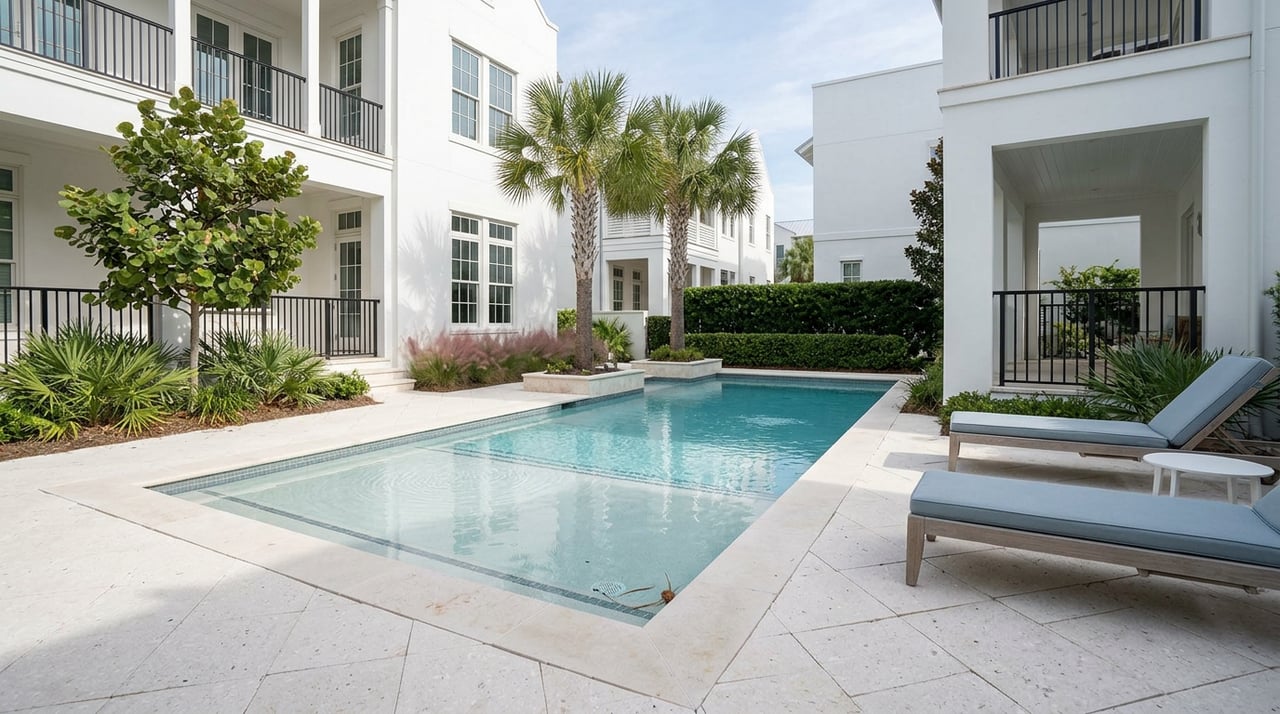
  • Premium or luxury: private heated pool, hot tub, chef-grade kitchen, concierge options, multiple living areas with AV, dedicated office space, and professional design plus photography.

Tip: Reliability beats flash. Non-working pool heat or spotty Wi-Fi will create negative reviews faster than any missing design finish. For more on reliability as an ROI driver, scan the 30A amenities and ROI overview.

Underwrite with simple, clear math

Use a straightforward revenue formula to pressure-test your assumptions.

  • Gross annual revenue = ADR x 365 x occupancy (occupancy as a decimal)

Anchors from local reporting:

  • Mid-market ADR context: about 545 dollars per night for 2025 on 30A as a regional average. Market context.
  • Community-level occupancy examples: around 41 percent annual occupancy in parts of east 30A, with variation by product and location. Seasonality overview.

Sample scenarios you can adapt:

  • Conservative condo example: ADR 300 dollars, occupancy 30 percent. Gross about 32,850 dollars per year.
  • Mid anchor example: ADR 545 dollars, occupancy 41 percent. Gross about 81,600 dollars per year using 544.73 dollars as the ADR anchor.
  • Upside premium home example: ADR 1,200 dollars, occupancy 50 percent. Gross about 219,000 dollars per year.

Always refine with street or building comps from a paid STR dataset or a local property manager’s 12-month P&L. Regional averages are a starting point, not a pricing rule.

Expenses, taxes, and rules you cannot skip

Getting the math right means moving from gross revenue to net cash flow and staying compliant.

  • Tourist Development Tax in South Walton: Short stays in 32461 require you to collect a 5 percent Tourist Development Tax. Verify the district and register through the county guidance at the Walton Clerk TDT page.
  • Walton County Short-Term Vacation Rental Registration: Annual certification is required, with fees and penalties for noncompliance. Start here and budget the registration process by reviewing the Walton County rental requirements.
  • Property management fees: Full-service STR management commonly ranges from about 15 to 30 percent of gross rental revenue depending on scope. Get quotes from local firms and confirm what is included.
  • Cleaning and supplies: Model per-stay cleaning based on your average length of stay. Confirm whether your manager includes cleaning in gross before commission.
  • Owner-paid utilities and services: Plan for internet, electricity, water, landscaping, and pool service. Heated pools add cost in cooler months, so budget accordingly.
  • Maintenance and reserves: Set aside 5 to 10 percent of gross for routine maintenance and long-term capital items. Homes with pools and hot tubs often require higher reserves.
  • Insurance and taxes: Ask for a short-term rental policy quote that includes windstorm and liability coverage. Model property taxes based on current millage and your purchase price.
  • HOA covenants and community rules: Pull the exact documents for your building or neighborhood to confirm minimum-stay requirements, parking rules, amenity access, and any rental caps. Rules can change by vote, so read the latest version.

A quick property vetting checklist

Use this to compare options and speed up diligence.

  1. Micro-location filter
  • Map distance and access to the Inlet Beach Regional Beach Access at South Orange Street. Confirm walk, bike, or golf cart rules and storage.
  • Note proximity to Camp Helen State Park and Lake Powell if your audience values nature and paddling. Park overview.
  1. Rental rule check
  • Request HOA covenants and rental rules for the specific unit or lot. Confirm minimum-stay rules, parking policies, amenity usage, and any special assessments.
  1. Revenue and pricing plan
  • Pull neighborhood-level comps through a paid STR dataset or a local manager’s 12-month P&L. Use the 30A ADR and occupancy context as a cross-check, then adjust by product and location. Seasonality and ADR context can guide your assumptions.
  1. Amenity decisions
  • Decide whether to add or market a heated pool, golf cart, or family gear. Use the ROI guidance to prioritize upgrades that influence conversion. Amenity ROI guide.
  1. Compliance and cost setup
  • Register for the county vacation rental program and TDT collection. Budget fees, cleaning, utilities, maintenance, and a management plan. County registration and TDT details.
  1. Marketing readiness
  • Invest in professional photography and a clear amenity list. Highlight walkability, access to lifeguarded beaches, and any nature or event proximity that fits your target guest.

Your Inlet Beach advisor

If you want a rental that performs and a purchase process that feels effortless, you need local insight and a clear plan. With deep 30A roots, data-informed pricing, and white-glove service, we help you find the right street, the right building, and the right amenity mix for your goals. From pinpointing revenue comps to prepping a listing for top-tier marketing, our approach blends analytics with lifestyle-driven presentation so you can buy with confidence and set up for strong reviews.

Ready to explore Inlet Beach opportunities with a tailored strategy? Schedule a free consultation with Laura Calhoun.

FAQs

What makes Inlet Beach appealing for vacation rentals?

  • The large regional beach access at 438 South Orange Street with lifeguards, restrooms, and ample parking, plus proximity to Camp Helen State Park and 30A events, supports both peak and shoulder-season demand. Beach access details and park overview.

How seasonal is demand in Inlet Beach and east 30A?

  • Summer drives a big share of revenue, while spring and fall can be strong with premium amenities. Recent local reporting places many east-30A communities around the low-to-mid 40 percent annual occupancy range. See seasonality context.

What ADR and occupancy should I model for underwriting?

  • Use a mid-market ADR anchor near 545 dollars and around 41 percent occupancy for a simple starting point, then refine with building or street comps. ADR context and seasonality overview.

Does a heated pool really increase revenue on 30A?

  • Yes. Local market guidance indicates a private heated pool can lift ADR and extend the booking season when it is reliable and marketed clearly. Amenity ROI guidance.

Condo or single-family: which is better for returns?

  • Condos often offer lower entry prices and steadier occupancy thanks to walkability and shared amenities, but they can have HOA rules that cap flexibility. Single-family homes can command higher ADRs, especially with private pools, yet carry higher operating costs. Your goals and budget should drive the choice.

What taxes and licenses do I need before hosting?

  • Register for Walton County’s Short-Term Vacation Rental program and collect the 5 percent South Walton Tourist Development Tax on qualifying stays. Start with the county rental requirements and confirm your TDT obligations.

Work With Laura

Whether you’re looking to buy, sell, or invest along the Emerald Coast, Laura’s unmatched local knowledge and meticulous approach will make all the difference. Known for her dedication to excellence, integrity, and client care, Laura is here to guide you every step of the way. Reach out today to experience a truly personalized, expert-led real estate journey with one of Northwest Florida’s most trusted brokers.